In a nutshell, sync licensing is the process of using music in films, television, commercials, video games, advertisements, and other media.
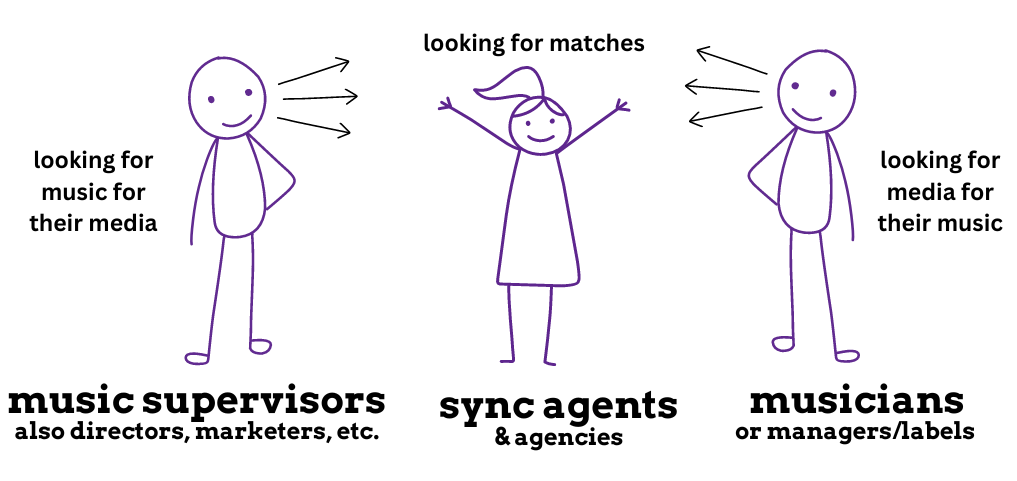
It usually involves music supervisors (people who select music for projects), music rights holders (songwriters, producers, record labels), and sync agents (people who act as a bridge between the two).
What is a music library?
A music library is a collection of licensable songs, usually the songs that a particular sync agent or agency (such as Cléo’s Collective) “represents.”
The details can vary, but generally speaking (and in our case), “representing” a song for sync means having the necessary information & permissions to pitch it to music supervisors, negotiate fees, and secure sync licenses on behalf of the artist.
How do I get a sync agent?
The process of finding a sync agent is similar to finding a manager, talent agent, record label, or other kinds of representation; some are actively recruiting or taking submissions, while others are closed or invite-only. Some record labels or music promotion companies also have dedicated sync agents or licensing managers.
Do your research, keep your goals in mind, and don’t get discouraged if it takes a while!
What to Look Out For
Know what’s being offered. Will your songs be actively pitched to niche opportunities, or just added to a music library? Both can be advantageous, but they are different.
Libraries can be stagnant. If your songs won’t be actively pitched, how will they be discovered, and what is the licensing process like? Is the library as a whole being promoted to media clients? How much traffic does the website see? How many of its songs have been licensed in the past year? Are sync fees negotiated, or fixed? Does licensing go through a human, or is it automated? You’ll want to have the full picture before signing on, especially if the representation you’re offered is exclusive.
Understand exclusivity. If someone offers “exclusive” representation, it means all licensing of your music has to go through them. Review terms carefully and make sure you’re happy with their offer.
Be wary of upfront fees. Very few reputable agents/agencies will ask for money upfront – they don’t need to, if they’re established and believe your music will make them money in the future. Getting a sum of money upfront gives them an incentive to take on more clients than they can handle, which in many cases indicates less passion for or investment in your music. In most cases, sync representation is more of an investment in you than a service you are paying for.
Exclusive vs Non-Exclusive
“Exclusive” representation means your sync agent has the right to license your music, and no one else does; you are not allowed to enter other sync licensing agreements.
This is great if you only want to work with one entity for sync, and you’re confident in their reputation and track record. For libraries, it’s advantageous because they can advertise to media clients that their music can’t be discovered or licensed anywhere else, which may drive more traffic to their catalogue (and to your music).
“Non-Exclusive” representation means your sync agent has the right to license your music, but others might too; you are free to enter other sync licensing agreements.
This is great if you want to work with multiple entities, already have other non-exclusive representation, or want the option to license your music directly or do your own pitching.
Cléo’s Collective represents music non-exclusively.
Where’s the money?
The rights holders to the compositions and recordings are typically paid a “sync fee” in exchange for the usage of their work.
Sometimes, sync agents charge upfront or ongoing fees for pitching music or including songs in their libraries; in some cases, they receive a percentage of ongoing royalties accrued from placements, and/or pay artists a buyout fee upfront and then keep 100% of sync fees.
Most often, sync agents are paid on commission, receiving an agreed-upon percentage (usually 30-50%, though it can be less or more) of the sync fees for placements they land.
At Cléo’s Collective, it’s free to join the library upon invitation/acceptance. Artists receive 75% of sync fees and keep 100% of any ongoing royalties accrued from placements.
How much does it cost to license music?
The amount varies widely – from a few hundred for a small project, to $10,000+ for a scene in a well-known television show, to $100,000+ for a major motion picture or ad campaign.
Factors include the type of media, the budget of a project, how much they want a particular song, the scope of the song’s use, the notoriety of the artist or popularity of the song, exclusivity, and more.
Sometimes this is a set amount, and other times it can be negotiated. Part of a sync agent’s job is doing their best to negotiate a fair deal.
How do I optimize my music for sync?
- Invest what you can into the quality of your recordings.
- Create/export and save instrumental versions of your songs (not only could they be licensable on their own, but they also might be requested to use interchangeably with full versions for situations like overlapping dialogue). Stems are also requested in some cases for more control over the mix.
- Work that is 100% original is easiest to license. Avoid using samples, or if you do, make sure you have the proper clearance & paperwork.
- Register your music with a PRO. This will make it easier for licensors to report their usage of your song, and is how royalties are paid.
- Keep your info organized & readily accessible (metadata, PRO status, lyrics, rights holders’ names & contacts)
- Bonus tip: Network with up-and-coming filmmakers!
Stay true to yourself!
It is not necessarily advisable to create what you think will have commercial appeal.
What’s popular or most “licensable” changes fast. You’ll either guess wrong, or you’ll guess right but find yourself competing for the same opportunities as everyone else trying to do the same thing.
There are all kinds of media projects, looking for all kinds of music, all the time!
Sure, hyper-specific lyrics may limit the number of relevant opportunities for a song, or a bad mix might hurt your chances of catching a music supervisor’s ear – but ultimately, originality is what will make you stand out!


 Germinates
Leave a comment